
Publications

15. Mechanistic Understanding of Thermal Stability and Safety in Lithium Metal Batteries

Kausthubharam, B.S. Vishnugopi, A. S. J. Alujjage, V. Premnath, W.S. Tang, J.A. Jeevarajan and P. P. Mukherjee 

Journal Paper Chemical Reviews (2025)

Abstract
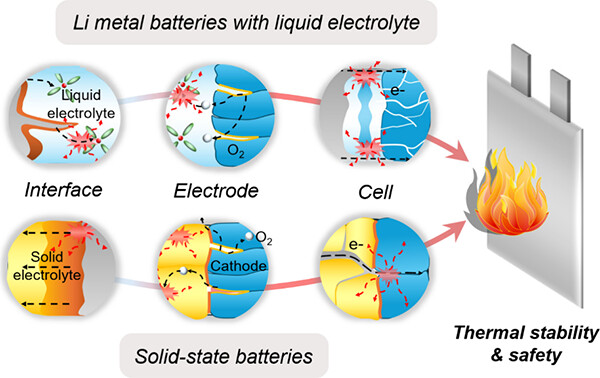
As lithium-ion batteries approach their theoretical capacity limits, lithium metal batteries (LMBs) have emerged as promising candidates for next-generation energy storage, offering substantially higher energy densities. However, their practical deployment remains limited by several interrelated challenges including lithium dendrite growth, parasitic side reactions, unstable solid electrolyte interphases (SEI), and poor cycling stability. While recent advances in electrolyte design, anode architecture, and interfacial engineering have significantly improved electrochemical performance, the thermal stability and safety of LMBs, particularly at the interface and electrode levels, still require extensive investigation. This review provides a comprehensive mechanistic analysis of thermal instability in LMBs, spanning material degradation, interfacial decomposition, and cell-level thermal behavior. We critically examine the roles of lithium metal, liquid- and solid-state electrolytes, and diverse cathode chemistries (e.g., layered oxides, sulfur) in triggering exothermic reaction pathways, gas evolution, and thermal runaway. The complex coupling among electrode–electrolyte interactions, interphase chemistry, electrochemo-mechanics, morphological evolution, and thermal instability across emerging LMB chemistries is highlighted. By identifying dominant thermal instability mechanisms and key knowledge gaps, this review establishes a mechanistic foundation for designing thermally resilient LMBs and outlines future directions for advancing safety in high-energy battery systems.
14. Interrogating the Thermo-Electrochemical Instability and Safety in Lithium Metal Electrodes with Liquid Electrolytes

R. Saha, A. S. J. Alujjage, B.S. Vishnugopi, A. Karmakar, D. R. R. Kannan, D. Tewari, F. Gray,  V. Premnath, W.S. Tang, J.A. Jeevarajan and P. P. Mukherjee 

Journal Paper Advanced Energy Materials, 202504145 (2025)

Abstract
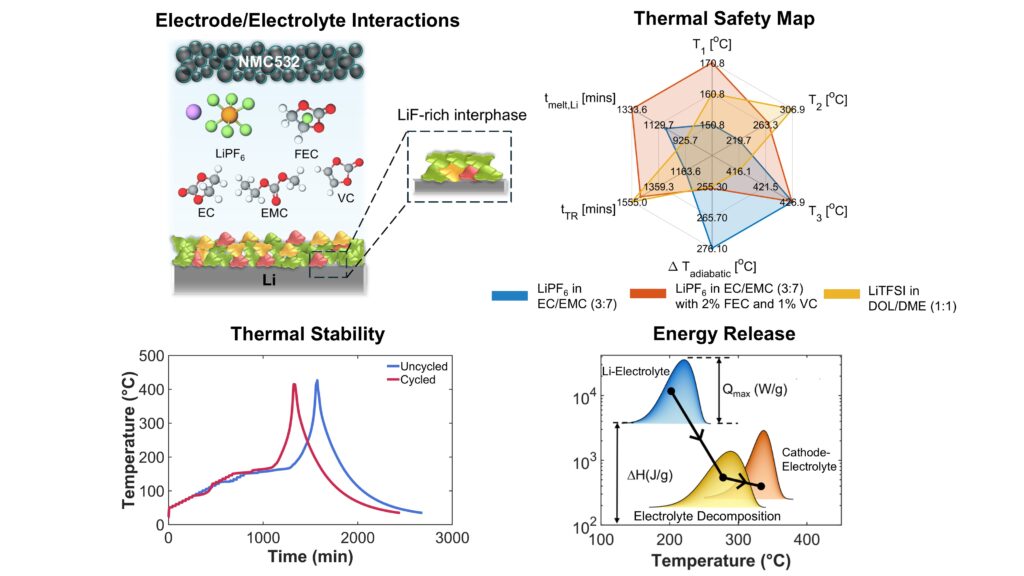
Lithium metal anodes (LMAs), with their high specific capacity and low electrochemical potential, are considered the ultimate choice for next-generation batteries. Significant efforts have been made to enhance the performance of LMAs, yielding encouraging progress toward improving the stability of lithium metal batteries (LMBs). However, the interplay between electrochemical performance and thermal safety remains a critical challenge, particularly in systems utilizing liquid electrolytes. This study presents a comprehensive investigation into the thermal stability of LMBs by evaluating the impact of different liquid electrolytes on electrochemical response, solid electrolyte interphase (SEI) formation, and thermal runaway characteristics. Through a combination of electrochemical experiments, accelerating rate calorimetry, and physics-based modeling, it delineates how electrolyte decomposition pathways and SEI chemistry play a pivotal role in the thermo-electrochemical stability of LMBs. The findings highlight a fundamental trade-off between electrochemical performance and safety, emphasizing the need for tailored electrolyte formulations to mitigate decomposition pathways leading to thermal instability. By establishing a mechanistic correlation between electrolyte composition, SEI evolution, and thermal stability, this study provides a framework for designing safer, high-performance LMBs.
13. Perspective on Thermal Stability and Safety of Sodium-Ion Batteries [Editor's Choice]

Kausthubharam, B.S. Vishnugopi, A. Sengupta, D.R.R. Kannan, V. Premnath, W.S. Tang, J.A. Jeevarajan and P. P. Mukherjee 

Journal Paper ACS Energy Letters, 10, 5383 (2025)

Abstract
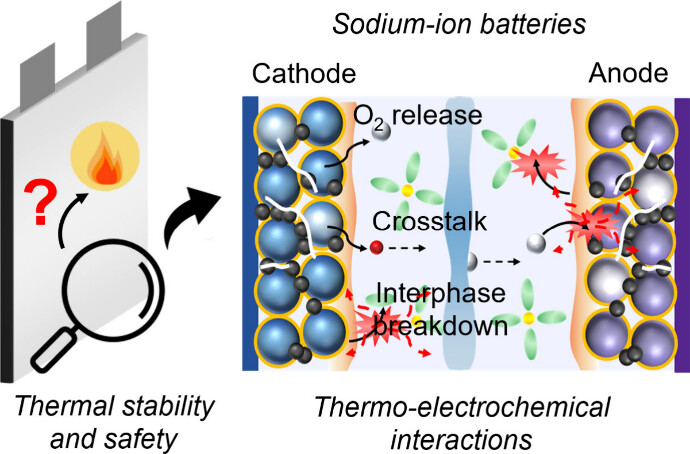
Sodium-ion batteries (SIBs) are gaining traction as an emerging contender for sustainable and cost-effective energy storage, due to the abundance and low cost of sodium resources. Although notable advancements have been made in improving electrochemical performance, the thermal stability of SIBs and the role of intrinsic degradation pathways are yet to be fully understood. This Perspective examines the mechanistic interactions that drive thermal instability in SIBs across material, electrode, and cell levels under operational extremes and abuse conditions. We analyze the thermo-electrochemical characteristics of key electrode and electrolyte components, including their interphases, to identify the underlying factors responsible for the distinct thermal response of SIBs compared to lithium-ion batteries (LIBs). By benchmarking current SIB prototypes against commercial LIB technologies in terms of cost–performance trade-offs, we outline critical challenges that must be addressed to enable safe and scalable deployment of SIB systems.
12. Mechanistic Interrogation of Li Stripping under Dynamic Operation in Solid-State Batteries

Kausthubharam, A. Ayyaswamy, B.S. Vishnugopi, D. Tewari, D.R.R. Kannan, V. Premnath, W.S. Tang, J.A. Jeevarajan and P. P. Mukherjee 

Journal Paper ACS Energy Letters, 10, 4212 (2025)

Abstract
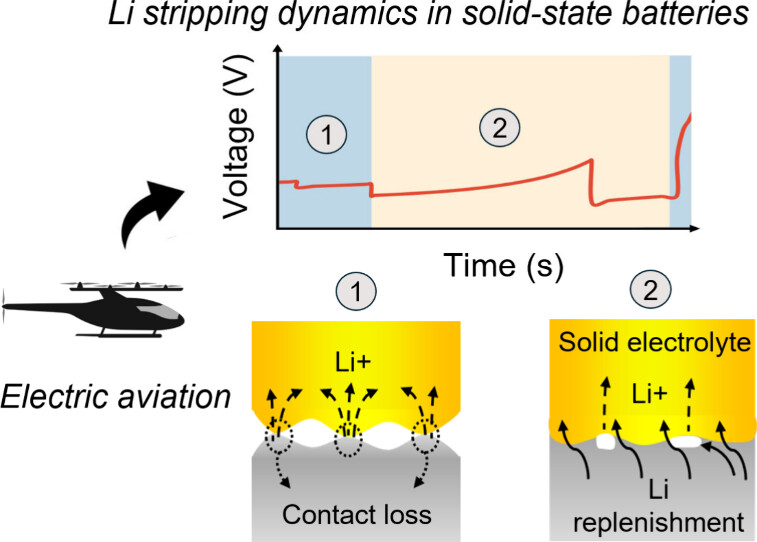
Solid-state batteries (SSBs) offer tremendous promise for electric aviation due to their high energy density and inherent safety advantages. However, the stability of solid/solid interfaces under dynamic, high-power discharge conditions, such as those in electric vertical takeoff and landing (eVTOL) aircraft, remains poorly understood. In this work, we reveal the mission-dependent nature of void growth at the lithium/solid-electrolyte interface across various eVTOL profiles and external pressures. We demonstrate how mission specifications like takeoff hover, altitude, and landing power drive contact loss, while low-power segments (e.g., cruise) promote contact recovery. A mechanistic paradigm linking contact loss and recovery to the interplay between reaction heterogeneity, chemomechanics, and lithium diffusion is established. We also quantify critical stack pressure regimes that govern void formation across the payload–range design space. These insights provide a foundational framework for designing mission-specific SSB architectures and pressure-control strategies tailored to the unique demands of electric aviation.
11. Co-design of Active Material and Solid Electrolyte Particulate Phases in Solid-State Battery Composite Electrodes

A. K. Sharma, B.S. Vishnugopi , A. Ayyaswamy, A. Nath, D. Chatterjee, D. Tewari, M. S. Ng, W. S. Tang, V. Premnath, J. A. Jeevarajan and P. P. Mukherjee

Journal Paper ACS Applied Materials & Interfaces (2025)

Abstract
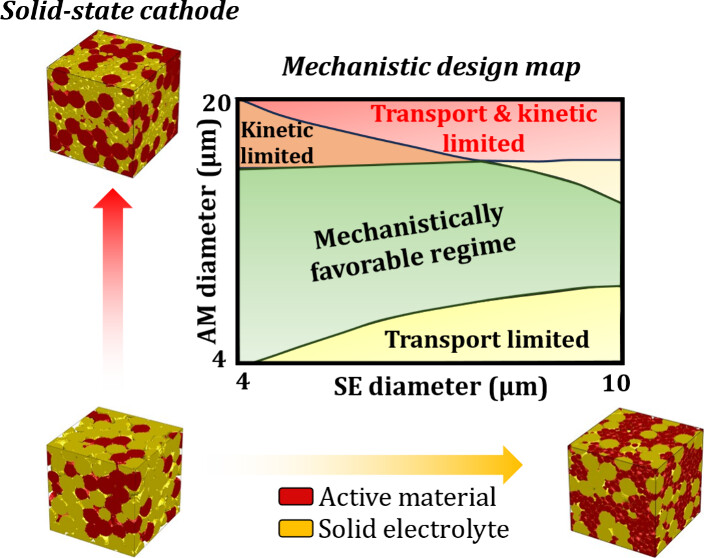
The performance of solid-state batteries (SSBs) is strongly influenced by the solid-state cathode architecture, particularly the particle sizes of the active material (AM) and solid electrolyte (SE). While smaller SE particles are known to consistently enhance composite-level effective ionic transport, the underpinning role of the AM particle size remains unclear. Although smaller AM particles are often assumed to enhance the rate capability, some experimental observations have shown conflicting trends. This study addresses this ambiguity by uncovering a mechanistic regime in which favorable AM particle sizes are governed by the trade-off between transport limitations and reaction kinetics. We investigate the fundamental question: Is there a mechanistic limit for the AM/SE particulate phase size pair that delivers an optimal electrochemical performance? Our results demonstrate that this regime is strongly coupled with intrinsic material properties such as Li diffusivity within the AM, ionic conductivity of the SE, the cathode loading. Smaller AM particles enhance lithiation/delithiation kinetics but increase ionic transport resistance, while larger AM particles reduce transport resistance but are limited by sluggish Li diffusion within the AM particles. Our study provides design guidelines for tailoring optimal particle sizes to achieve high-performance SSB cathodes, enabling simultaneous improvement in energy and power density.
10. Electrode–Electrolyte Interactions Dictate Thermal Stability of Sodium-Ion Batteries

S. Sarkar, A. Karmakar, B.S. Vishnugopi , J. A. Jeevarajan and P. P. Mukherjee

Journal Paper Chemical Communications, 60, 12868 (2025)

Abstract
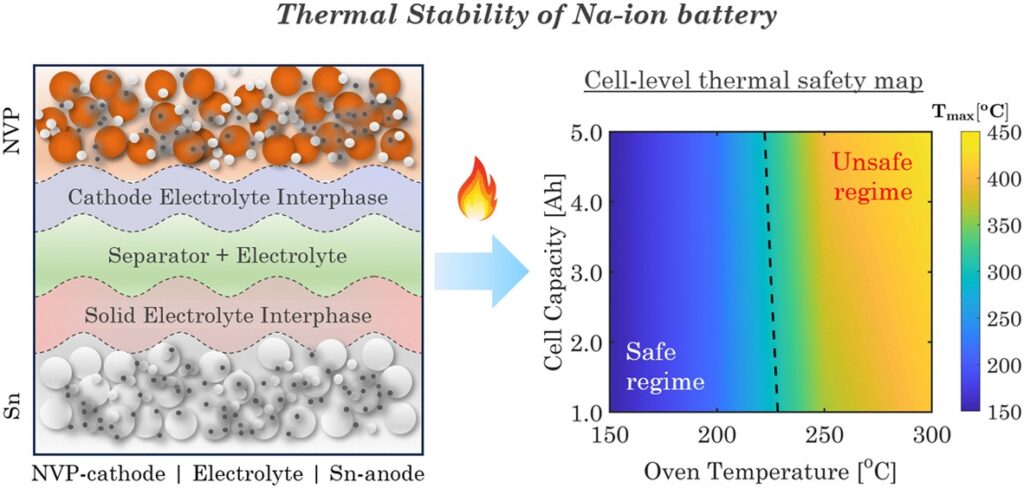
This work delineates the thermal safety of full-scale sodium-ion batteries (SIBs) by interrogating the material-level electrochemical and thermal responses of micro and nano-structured tin (Sn) based anodes and sodium vanadium phosphate (NVP) cathodes in suitable electrolyte systems. Informed by these material-level signatures, we delineate cell-level thermal safety maps cognizant of underlying electrode–electrolyte interactions in SIBs.
9. Quantifying the effect of degradation modes on Li-ion battery thermal instability and safety

V. Kabra, A. Karmakar, B.S. Vishnugopi and P. P. Mukherjee

Journal Paper Energy Storage Materials,  74, 103878 (2024)

Abstract
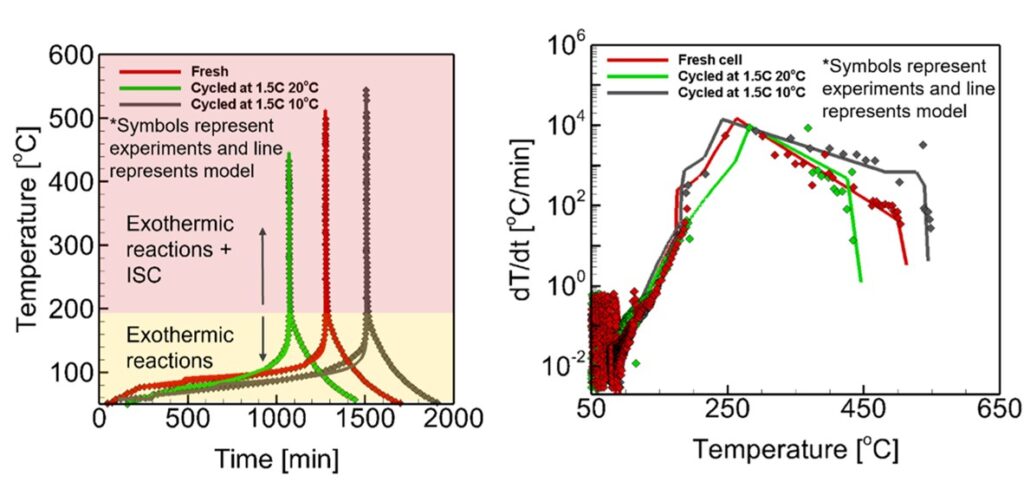
Understanding the thermal stability of lithium-ion (Li-ion) cells is critical to ensuring optimal safety and reliability for various applications such as portable electronics and electric vehicles. In this work, we demonstrate a combined modeling and experimental framework to interrogate and quantify the role of different degradation modes on the thermal stability and safety of Li-ion cells. A physics-based Li-ion cell aging model is developed to describe the underpinning role of degradation mechanisms such as Li plating, solid electrolyte interphase growth, and the loss of electrode active material on the resulting capacity fade during cycling. By incorporating mechanistic degradation descriptors from the aging model, we develop a degradation-aware cell-level thermal stability framework that captures key safety characteristics such as thermal runaway (TR) onset temperature, self-heating rate, and peak TR temperature for different cycling conditions. Additionally, we perform electrochemical and accelerating rate calorimetry (ARC) experiments to evaluate the thermo-kinetic parameters associated with the various exothermic reactions during TR of pristine and aged Li-ion cells. Through a synergistic integration of thermo-electrochemical characteristics from the ARC experiments and degradation insights from the cell aging model, the proposed aging-coupled safety framework provides a baseline to quantify the thermal stability of Li-ion cells subject to a wide range of operating conditions and degradation scenarios.
8. Performance Metrics and Mechanistic Considerations for the Development of 3D Batteries

K. Nieto, D.S. Windsor, B.S. Vishnugopi , P. P. Mukherjee and A.L. Prieto

Journal Paper Nature Reviews Chemistry,  9, 118 (2025)

Abstract
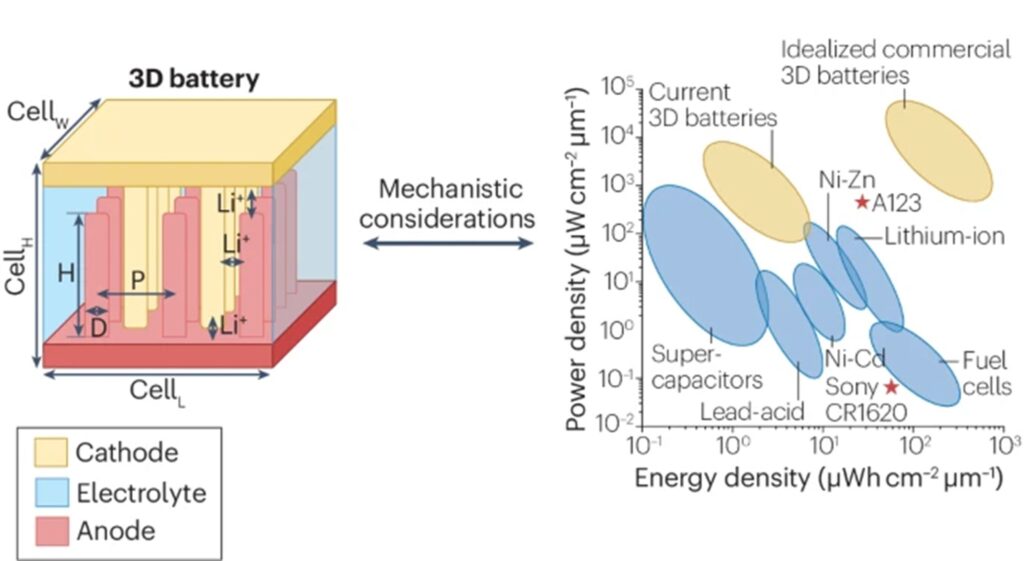
There is an urgent need for improved energy storage devices to enable advances in markets ranging from small-scale applications (such as portable electronic devices) to large-scale energy storage for transportation and electric-grid energy. Next-generation batteries must be characterized by high energy density, high power density, fast charging capabilities, operation over a wide temperature range and safety. To achieve such ambitious performance metrics, creative solutions that synergistically combine state-of-the-art material systems with advanced architectures must be developed. The development of 3D batteries is a promising solution for achieving these targets. However, considerable challenges remain related to integrating the various components of a battery into an architecture that is truly 3D. In this Review, we describe the status of 3D batteries, highlight key advances in terms of mechanistic insights and relevant performance descriptors, and suggest future steps for translating current concepts into commercially relevant solutions.
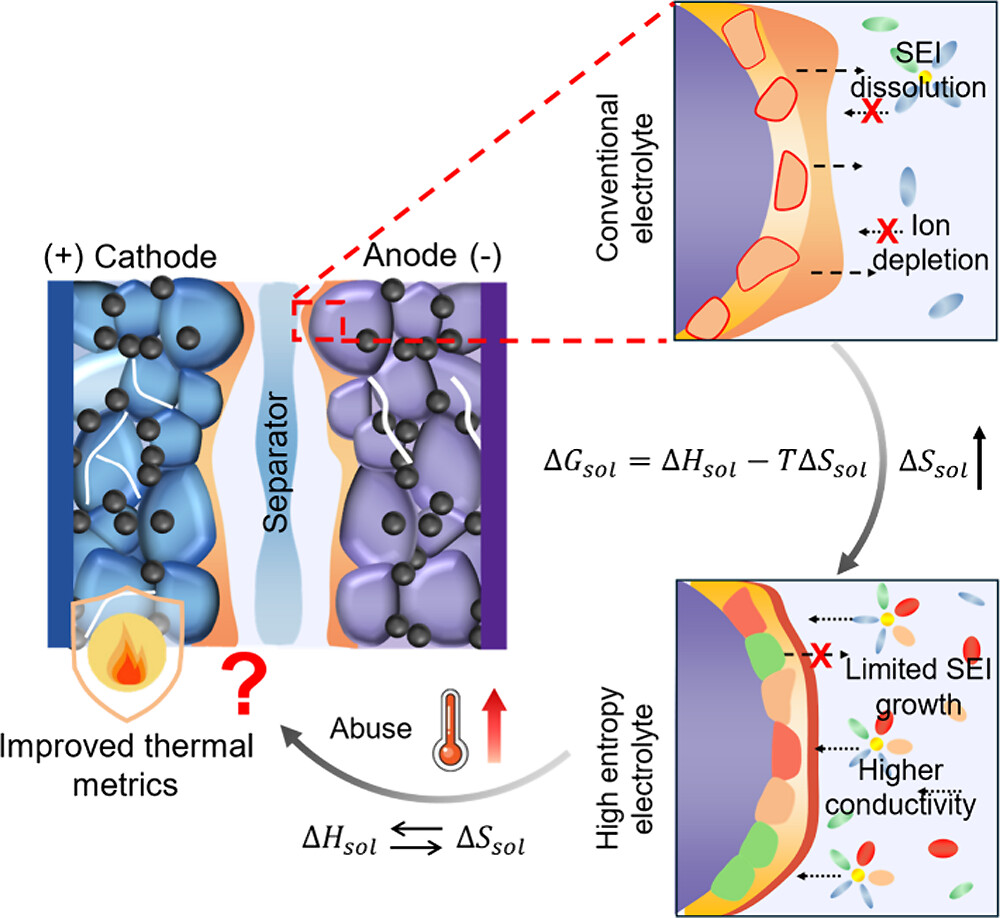
7. High-Entropy Electrolytes in Sodium-Ion Batteries: Performance and Safety Perspective

S. Sudhakaran, Kausthubharam, B.S. Vishnugopi, P. P. Mukherjee, and V. G. Pol

Journal Paper ACS Energy Letters, 10, 4567 (2025)

Abstract
Sodium-ion batteries (SIBs) have attracted considerable research interest over the past decades as a promising alternative to lithium-ion batteries (LIBs) because of the greater natural abundance of sodium (∼2.6% in the Earth’s crust), lower raw material costs (∼30–40% less), and an improved safety profile. Growing sustainability concerns and increasing geopolitical tensions surrounding critical minerals, such as lithium and cobalt, further underscore the urgent need to advance SIB technologies. While SIBs currently lag behind LIBs in terms of energy density (∼40–60% lower), commercialization, and supporting infrastructure, they are rapidly gaining traction in niche applications where these drawbacks are less critical. In particular, SIBs are being actively explored for stationary energy storage systems and for low-temperature applications such as deep-sea operations, aerospace missions, and polar expeditions. In case of low-temperature operations, SIBs outperform LIBs due to their faster ion transport kinetics, primarily attributed to their smaller Stokes radius and lower desolvation energy at the electrode–electrolyte interface. For instance, in propylene carbonate (PC) solutions, Na+ exhibits a Stokes radius of 4.6 Å and a desolvation energy of 157.3 kJ mol–1, compared to 4.8 Å and 218 kJ mol–1 for Li+. These properties collectively enable more efficient charge transfer processes at subzero temperatures, positioning SIBs as promising candidates for energy storage in harsh and cryogenic conditions.
6. MoChA: Modeling, Characterization and Analytics in Electrochemical Energy Systems

D. Chatterjee, P. Mitra, A. Singla, S. Banerjee, A. S. J. Alujjage and P. P. Mukherjee 

Journal Paper ACS Energy Letters, 10, 3430 (2025)

Abstract

Electrochemical energy storage and conversion systems have emerged as pivotal technologies supporting the diversification of energy infrastructure across grid storage, transportation and industrial sectors. At their core lies a complex interplay of charged species transport and energy flow through dynamic chemical and material environments and electrochemically reactive interfaces. (8) Advancing the performance, efficiency and reliability of these systems hinges on resolving persistent challenges such as degradation of materials and interfaces, kinetic bottlenecks in charge transport, and the need for materials that balance performance with sustainability. Unraveling these complex, multiscale dynamics necessitates a multifaceted approach that combines cutting-edge techniques for real-time observation, comprehensive analysis and predictive modeling.
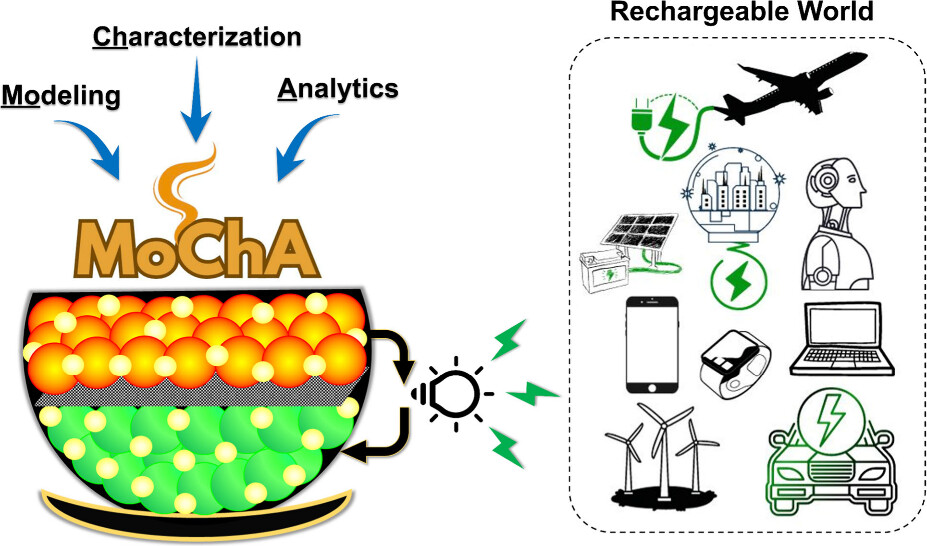
In this article, we underscore Modeling, Characterization, and Analytics as the three pillars of electrochemical sciences and engineering, and introduce their integration, ‘MoChA’, as a holistic paradigm for addressing scientific challenges at scales in electrochemical energy storage and conversion. Multiphysics modeling provides a deep understanding of coupled electro-chemo-mechanical processes bridging length scales from atomic and continuum scale to system-level performance. Characterization offers powerful tools to decode fundamental spatiotemporal reactions and structural changes and visualize critical degradation mechanisms. Analytics transforms raw data into actionable knowledge through data-driven frameworks, enabling predictive diagnostics by aggregating experimental and simulation data sets to uncover hidden correlations linking material properties to device performance. By connecting mechanisms, functionalities, materials synthesis, and rational design, MoChA serves as an all-encompassing approach that enhances the efficiency, performance, and cost-effectiveness of electrochemical energy systems.
5. Synergistic Influence of Anode Composition and Electrolyte Interactions in Sodium-Ion Cells

P. Ranganathan , B.S. Vishnugopi, F. S. Gray, D. R. R. Kannan, A. Karmakar, J. A. Jeevarajan and P. P. Mukherjee
In Preparation  (2025)

4. Impact of Electrolyte Volume on Lithium Plating Dynamics and Thermal Stability in Lithium-Ion Batteries

A. S. J. Alujjage, S. P. Rangrajan, A. Ayyaswamy, A. Karmakar, B.S. Vishnugopi, J. A. Jeevarajan and P. P. Mukherjee
In Preparation (2025)

3. Mechanistic Insight into the Thermal Stability of Solid-State Batteries

B.S. Vishnugopi, Kaustubharam, J. A. Jeevarajan and P. P. Mukherjee
In Preparation (2025)

2. Fundamental Understanding of the Thermal Stability and Safety of Next-Generation Lithium Metal Batteries

Kausthubharam, A.S.J. Alujjage, B.S. Vishnugopi, J.A. Jeevarajan and P. P. Mukherjee
In Preparation (2025)

1. Degradation-Safety Interactions in Na-Ion Batteries

Kausthubharam, A. Sengupta, B.S. Vishnugopi, J.A. Jeevarajan and P. P. Mukherjee
In Preparation (2025)

Conference Presentations

22. Mechanistic Role of Electrode/Electrolyte Interactions on the Thermal Stability of Sodium-Ion Batteries

P. Ranganathan, A. Karmakar, A. Sengupta, B. S. Vishnugopi, G. Frederick, D. R. R. Kannan, V. Premnath, W. S. Tang, J. A. Jeevarajan and P. P. Mukherjee
Conference Presentation 248th ECS Meeting, Chicago, IL (2025)

21. Pressure-Driven Thermo-Electrochemical Interaction and Safety in Solid-State Batteries

A. K. Sharma, B. S. Vishnugopi, A. Miguel, D. Tewari V. Premnath, W. S. Tang, J. A. Jeevarajan and P. P. Mukherjee
Conference Presentation 248th ECS Meeting, Chicago, IL (2025)

20. Stripping Behavior of Solid-State Batteries Under Dynamic Discharge Loads for Electric Vertical Take-Off and Landing Aircraft

Kausthubharam, B. S. Vishnugopi, D. R. R. Kanan, G. Frederick, V. Premnath, W. S. Tang, J. A. Jeevarajan and P. P. Mukherjee
Conference Presentation 248th ECS Meeting, Chicago, IL (2025)

19. Investigating Thermo-Electrochemical Stability of Lithium Metal Electrodes with Liquid Electrolytes

R. Saha, A. S. J. Alujjage, A. Karmakar, B. S. Vishnugopi, D. R. R. Kanan, G. Frederick, V. Premnath, W. S. Tang, J. A. Jeevarajan and P. P. Mukherjee
Conference Presentation 248th ECS Meeting, Chicago, IL (2025)

18. Co-Design of Particle Size and External Pressure in All-Solid-State Battery Cathodes

M. A. Nafi, B. S. Vishnugopi, D. R. R. Kanan, G. Frederick, V. Premnath, W. S. Tang, J. A. Jeevarajan and P. P. Mukherjee
Conference Presentation 248th ECS Meeting, Chicago, IL (2025)

17. Role of Cathode-Electrolyte Interphase in Thermal Stability of High-Energy Na-Ion Batteries

A. Sengputa, B. S. Vishnugopi, D. R. R. Kanan, G. Frederick, V. Premnath, W. S. Tang, J. A. Jeevarajan and P. P. Mukherjee
Conference Presentation 248th ECS Meeting, Chicago, IL (2025)

16. Mechanistic Insights into Interface Instability of Sodium Metal Electrodes

P. P. Mukherjee, A. Singla and B. S. Vishnugopi
Conference Presentation MRS Spring Meeting & Exhibit, Seattle, WA (2025)

18. Mechanistic Interactions at Scale in Electrochemical Energy Storage

P. P. Mukherjee
Departmental Seminar  Department of Mechanical Engineering, University of Wisconsin–Madison (2025)

15. Gradients and Instabilities in Solid-State Battery Architectures (invited)

P. P. Mukherjee, B. S. Vishnugopi, A. Ayyaswamy
Conference Presentation PRiME 2024, Honolulu, HI (2024) 

14. Interface Dynamics and Heterogeneities in Solid-State Batteries

B. S. Vishnugopi, K. G. Naik and P. P. Mukherjee 
Conference Presentation PRiME 2024, Honolulu, HI (2024)

13.Thermo-Electrochemical Stability of Solid-State Batteries (invited)

P. P. Mukherjee and B. S. Vishnugopi
Conference Presentation 245th ECS Meeting, San Francisco, CA (2024) 

12. External Cooling and Degradation Interplay in Lithium-Ion Battery Fast Charging

A. Karmakar, B. S. Vishnugopi, and P. P. Mukherjee 
Conference Presentation 245th ECS Meeting, San Francisco, CA (2024)

11. Interrogating Internal Temperature Evolution in Li-Ion Cells

A. S. J. Alujjage, B. S. Vishnugopi, Y. Barsukov, D. P. Magee and P. P. Mukherjee 
Conference Presentation 245th ECS Meeting, San Francisco, CA (2024)

10. Mechanistic Analysis of Interface Instability in Solid-State Batteries (invited)

B. S. Vishnugopi, K. G. Naik and P. P. Mukherjee 
Conference Presentation TMS Annual Meeting & Exhibition, Orlando, FL (2024) 

9. Mechanistic Interactions at Scale in Electrochemical Energy Storage

P. P. Mukherjee 
Departmental Seminar Department of Mechanical Science and Engineering, University of Illinois at Urbana-Champaign, IL (2024) 

9. Operando Monitoring and Analytics of Internal Temperature Dynamics in Li-Ion Batteries

A. S. J. Alujjage, B. S. Vishnugopi, Y. Barsukov, D. P. Magee and P. P. Mukherjee 
Conference Presentation NSF Student Poster Competition, Portland, OR (2024) 

8. Mechanistic Interrogation of Alloy Interlayers in Solid-State Batteries

D. Chatterjee, K. G. Naik, B. S. Vishnugopi and P. P. Mukherjee 
Conference Presentation 2024 MRS Fall Meeting & Exhibit, Boston, MA (2024) 

7. Mechanistic Analysis of Solid Electrolyte Interphase Interactions in Sodium Metal Electrodes

A. Singla, K. G. Naik, B. S. Vishnugopi and P. P. Mukherjee 
Conference Presentation 2024 MRS Fall Meeting & Exhibit, Boston, MA (2024) 

6. Synergistic Influence of Anode Composition and Electrolyte Interactions in Sodium-Ion Cells

P. Ranganathan, S. Sarkar, B. S. Vishnugopi and P. P. Mukherjee 
Conference Presentation 2024 MRS Fall Meeting & Exhibit, Boston, MA (2024) 

5. Mechanistic Role of External Stack Pressure on the Thermal Stability of Solid-State Batteries

M. T. Hasan, A. Karmakar, B. S. Vishnugopi and P. P. Mukherjee 
Conference Presentation 2024 MRS Fall Meeting & Exhibit, Boston, MA (2024) 

4. Thermo-Electrochemical Interactions in Solid-State Batteries (invited)

P. P. Mukherjee and B. S. Vishnugopi
Conference Presentation 244th ECS Meeting, Gothenburg, Sweden (2023) 

3. Void Growth Dynamics in Solid-State Batteries

B. S. Vishnugopi, K. G. Naik and P. P. Mukherjee 
Conference Presentation 244th ECS Meeting, Gothenburg, Sweden (2023) 

2. Mechanistic Underpinnings of Heterogeneities in Solid-State Battery Cathode

K. G. Naik, B. S. Vishnugopi and P. P. Mukherjee 
Conference Presentation 244th ECS Meeting, Gothenburg, Sweden (2023) 

1. Mechanics-Coupled Interface Kinetics in Solid-State Batteries

D. Chatterjee, K. G. Naik, B. S. Vishnugopi and P. P. Mukherjee 
Conference Presentation 244th ECS Meeting, Gothenburg, Sweden (2023)Â